
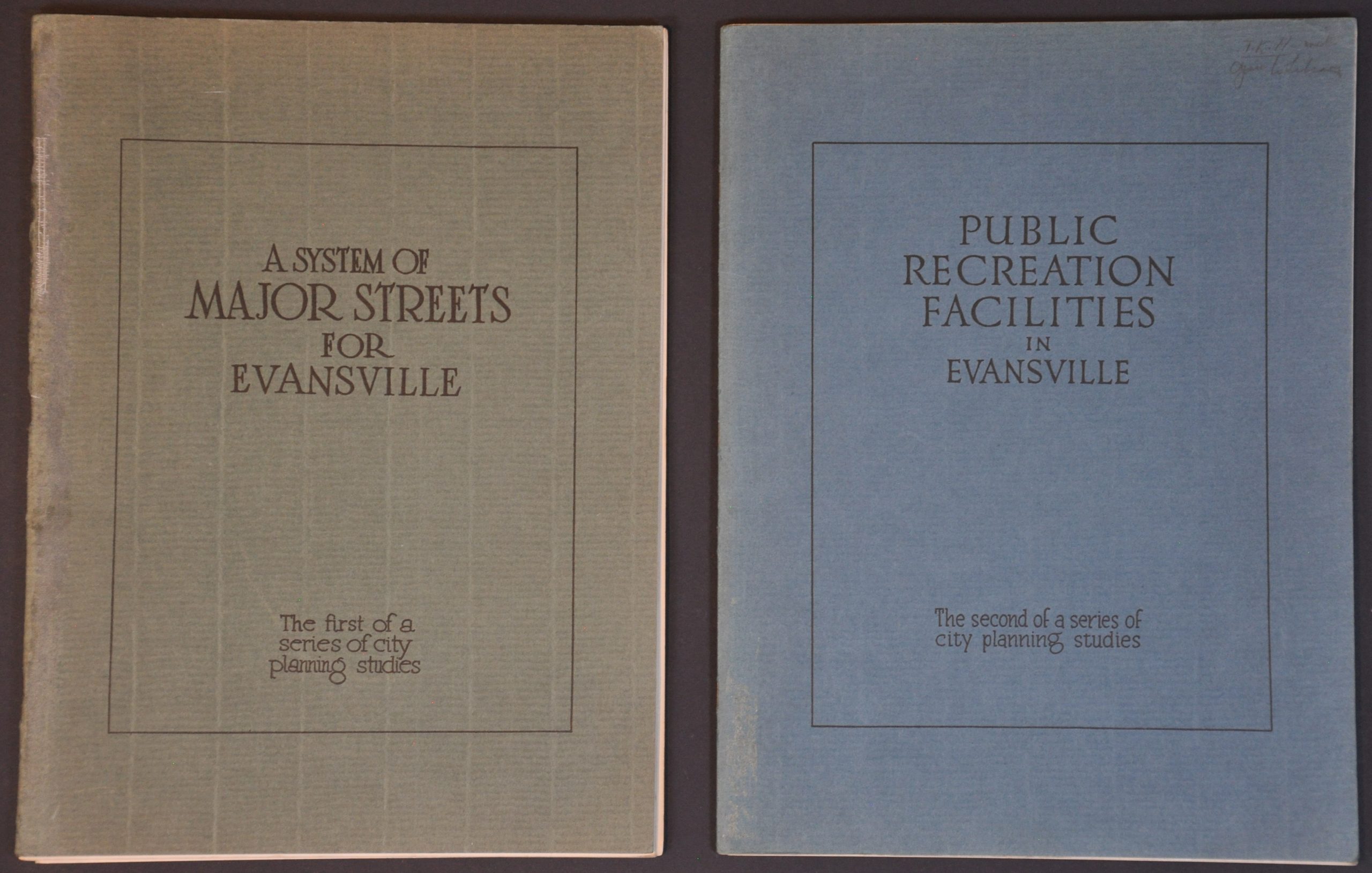
A System of Major Streets for Evansville [and] Public Recreation Facilities in Evansville
$ 96.86
Categories: Longsleeve Shirts, Draftbox, Brand: Armaf
The City Beautiful movement was a North American planning philosophy that flourished between the 1890s and 1920s, with proponents believing that renovating a city with monumental architecture and orderly layouts would foster civic virtue and improve the standard of living for the urban masses. From Washington, D.C. to Denver, city centers were dramatically overhauled to modernize transportation, incorporate recreation, improve public health, and revitalize local economies. The strength of the movement was such that it even reached southern Indiana, as reflected in this pair of plans printed in the mid-1920s. The first and second volumes in a series of planning studies for Evansville, the paper-bound booklets are enthusiastic efforts to highlight the potential of an industrial city at the junction of the Ohio and Wabash Rivers (and home to my alma mater). The Plan for the Development of a System of Major Streets showcases Evansville’s prime geographic Tri-state position and its significant 20th-century population growth. A comprehensive street system would help underdeveloped areas, improve the flow of traffic, and better connect with surrounding communities (as supported by a number of maps and diagrams). Very little attention is given to public transit options. The Plan for the Development of a System of Recreation Facilities uses a similar effective combination of charts, maps, photographs, statistics, and persuasive text to encourage the audience that significant public investment is needed in parks, ‘pleasure drives’, and playgrounds. Of note is historic Bosse Field, opened in 1915 as the first municipally owned sports stadium in the United States. Issued in 1925 (major streets) and 1927 (recreation facilities) by The City Plan Commission, a civic organization created by the state in 1921 to ‘encourage Indiana cities to devote more thought to the broad problems of growth.’ – pg 5. The pair of ambitious proposals was designed by the renowned firm of Harland Bartholomew, the first full-time urban planner in the U.S. During his long career, Bartholomew conducted planning activities in more than two dozen cities. During this time, he used design techniques and zoning laws to reinforce local patterns of racial segregation. This practice is alluded to in pg. 12 of Vol I – “The city itself, failing to appreciate the social and economic significance of land subdivision and the public questions involved, has paid little attention to this important work. It is being realized now, however, that the city has a vital interest in the activities of land subdividers.” Restricted Use Districts are also outlined in the recommended subdivision rules – Evansville did not yet have a zone plan, though recently passed legislation ensured the work was underway.